How Easy are Polish Trains to Use?
They are very easy for me, a native Pole who has used trains very often in my younger years and currently several times a year when visiting family every summer. However, for foreign visitors who don't speak Polish and have no knowledge of Polish public transport, it may not be easy. Don't worry though; in this post I'll explain where to buy your ticket, different types of trains and what they offer, and how to navigate the busy main train stations.
Types of Trains
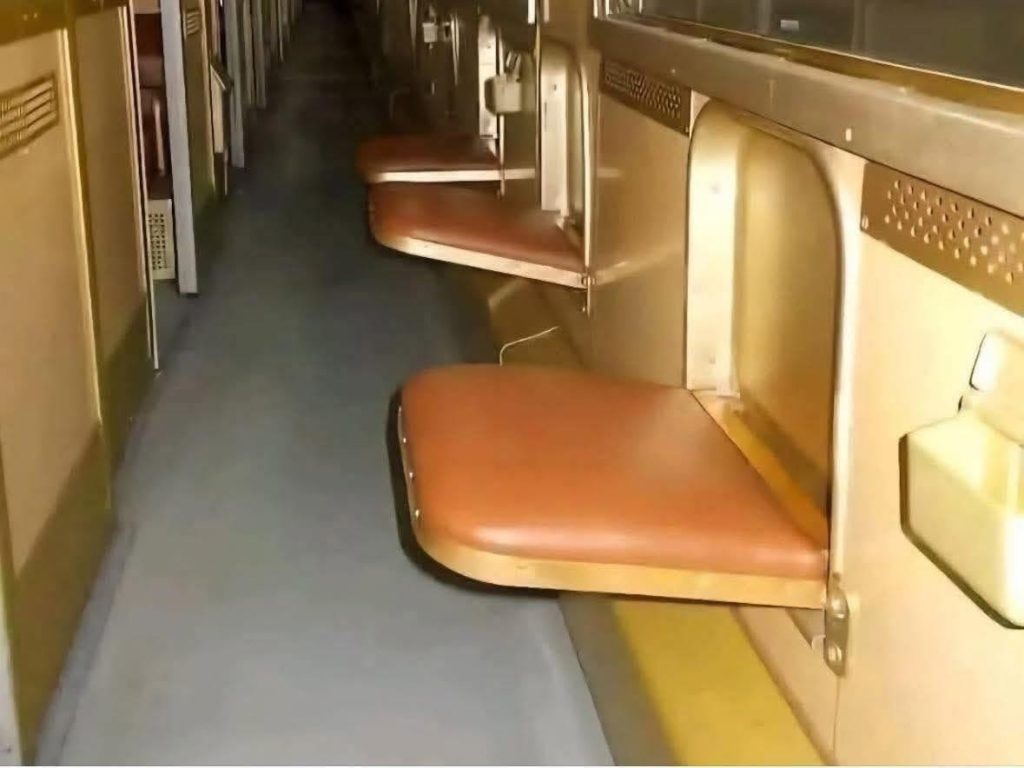
As one of the most popular modes of transport, trains have significantly changed since my childhood days, when I often had to sit on a tiny old school corridor seat, with my bag and legs blocking the way of people walking past, and during busy periods, people lying on top of each other! Your only headrest was the window or a passenger next to you, and if you needed to use the toilet, it felt like climbing Everest. Here is a photo for the record.
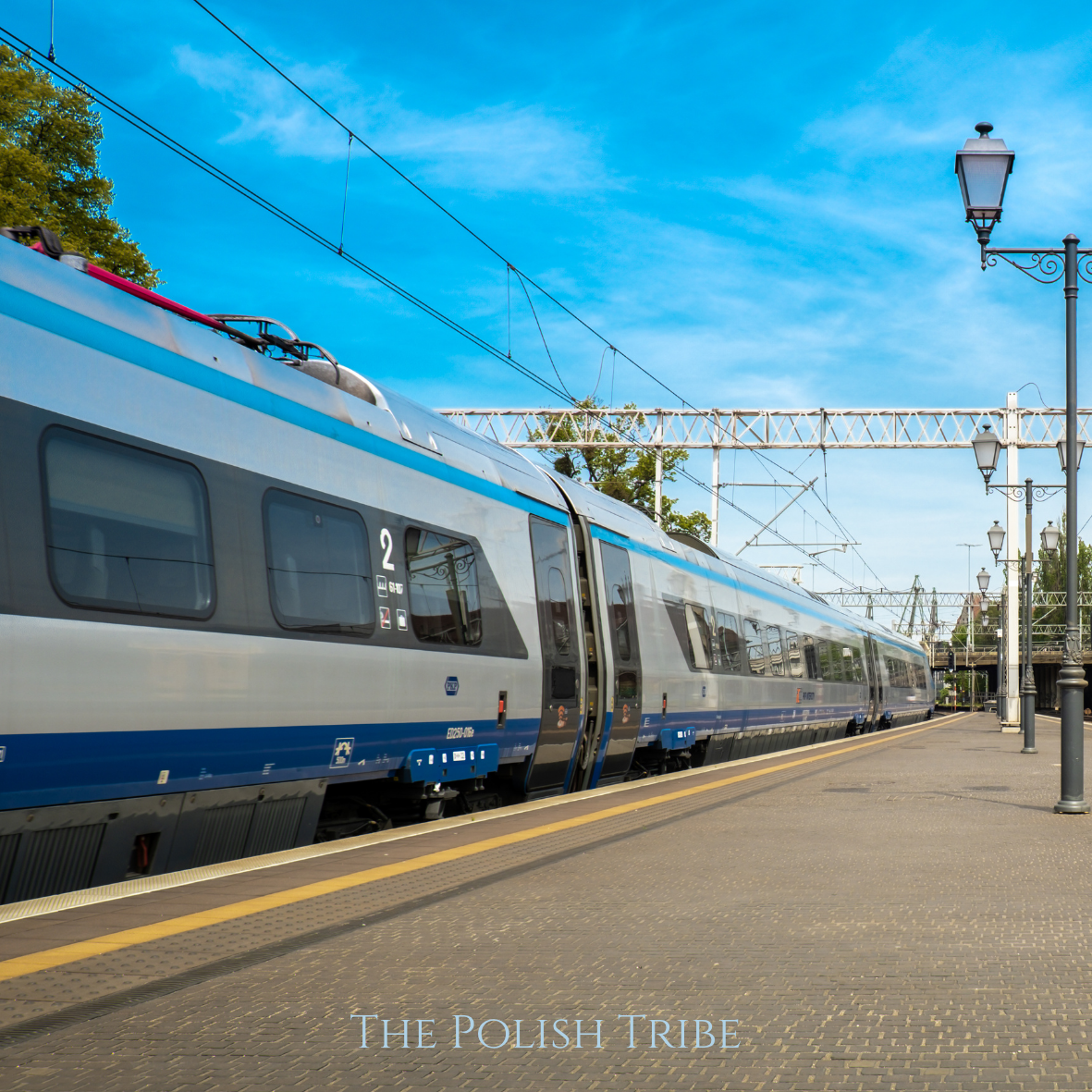
Back in 2026, Polish trains are modernised and more efficient. They are rarely cancelled and occasionally delayed, mainly on long-distance and intercity routes, with national overall punctuality at around 91%.
It's important to note that there are several different types of trains in Poland including:
- EIP (Express InterCity Premium / Pendolino) - the fastest and most exclusive trains where seats need to be pre-booked. First Class passengers also get a snack and 2 drinks to choose from (hot or cold), daily newspapers, as well as refreshing wipes brought to your seat.
- EIC (Express InterCity) - high-standard express trains running on the main country routes and abroad. Restaurant and bar WARS available on all trains.
- IC (InterCity) - comfortable, fast trains linking larger cities and regions. Restaurant and bar WARS are available in some trains. Please check at the time of booking or on your ticket; it should display a cutlery icon, WR (restaurant coach/car) or R (bar).
- TLK (Twoje Linie Kolejowe) - semi-fast economy trains stopping at more stations, including some smaller ones. Restaurant and bar WARS available on some trains.
- REGIO (R) - local trains run mainly by POLREGIO, as well as the local government, stopping at every station.
- Semi-Fast Trains (RP / OsP) - regional trains with fewer stops and therefore faster on longer local routes.
- Local Government and Metropolitan Area Trains - trains running in specific regions such as Koleje Dolnośląskie (Lower Silesia), Koleje Mazowieckie (Masovian), Łódzka Kolej Aglomeracyjna (Łódź Metropolitan Trains) or SKM in Trójmiasto (Tricity - Gdańsk, Gdynia, Sopot)
Where to Buy Your Ticket?
At the station
You can buy all types of tickets at the station ticket office in advance or right before your journey. Most major and some smaller stations also have ticket machines. Please remember that on popular longer routes and during busy periods (e.g. summer or Christmas) it is better to buy your ticket in advance with a reserved seat, as you might not be able to get a place and have to stand in the corridor with no old-school seats available anymore! These days I often buy 1st class tickets as they offer more comfort and space for luggage.
Online
Another option to get your ticket is online on various websites and apps such as:
- https://www.polishtrains.eu, also available on the app.
- https://www.intercity.pl/en/ for long-distance trains, also available on the app.
- https://koleo.pl/en - very popular and best rated KOLEO APP for mobile phone.
From the Train Conductor
If you are running late and can't buy your ticket elsewhere, you can get it from the train conductor, except on EIP or Pendolino trains, where seats must be booked in advance. Let the conductor know just before you board (while still on the platform) or as soon as you get on. Please note that tickets bought that way cost more, from about 4zl for the regional trains to 20zl for PKP Intercity. That said, on several occasions I bought tickets from the conductor on the way to Krakow Airport and was never charged extra. To avoid the extra costs, use a ticket machine available on most local trains. Beware, this service is not available on the long-distance trains (EIC or IC).
How to Locate Correct Platform for Your Train?
You can easily get this information from the online passenger portal for all PKP trains https://portalpasazera.pl/en/KatalogStacji/Index . Simply choose your station from the list or type it in the search bar, then click on 'station display' on the right-hand side, and it will show live departures and arrivals from that station. It will also mention any delays and, of course, the platform number. Please check it regularly, as your departure platform might change at the last minute due to delays of your train or other trains.
If you are not able to check online, look for the main station display, usually located near the ticket offices; it will also show the track number. Each platform should also have a smaller display with the latest departures; however, some smaller stations may not have them. To make sure you are in the right place, check the track display, which will show the next train arriving.
Remember, if you feel like you have no idea where to go, just ask people nearby. Most younger people do speak basic English and many are fluent.
How to Find my Coach and Booked Seats?
Your coach and pre-booked seat number should be on your ticket. Just before your train arrives at the platform, they announce where the coaches are located, e.g., at the front, middle, or back. At the major city train station, the announcements are also in English. Otherwise, you have to be prepared to run if you are not at the right spot! Believe it or not, I had to do it more than once. Hands down, this is usually the most stressful moment of the whole journey.
Each coach has its number clearly displayed on or near the door, but if you can't find yours, ask the train conductor. Once on the train, your seat numbers will be displayed either on each compartment door (they usually have 4, 6, or 8 seats, depending on the standard) or directly on the seats in open-plan coaches.
Useful Vocabulary
POCIAG - train
ODJAZDY - departures
PRZYJAZDY - arrivals
DWORZEC KOLEJOWY - train station
PERON - platform
TOR - track
WAGON - coach/car
PRZEDZIAL - compartment
KONDUKTOR - train conductor
BILET - ticket
After you have learnt a bit about Polish trains, their types, where to book your tickets, and how to navigate the station, I hope your coming trip to Poland will be less daunting and stressful. If you have any comments or questions, please post them below or on our Facebook page.
Enjoy Poland!
Fantastic summary of the Polish trains. Will definitely be useful at my coming trip!
Thank you so much Jackie and I'm glad you found it useful!